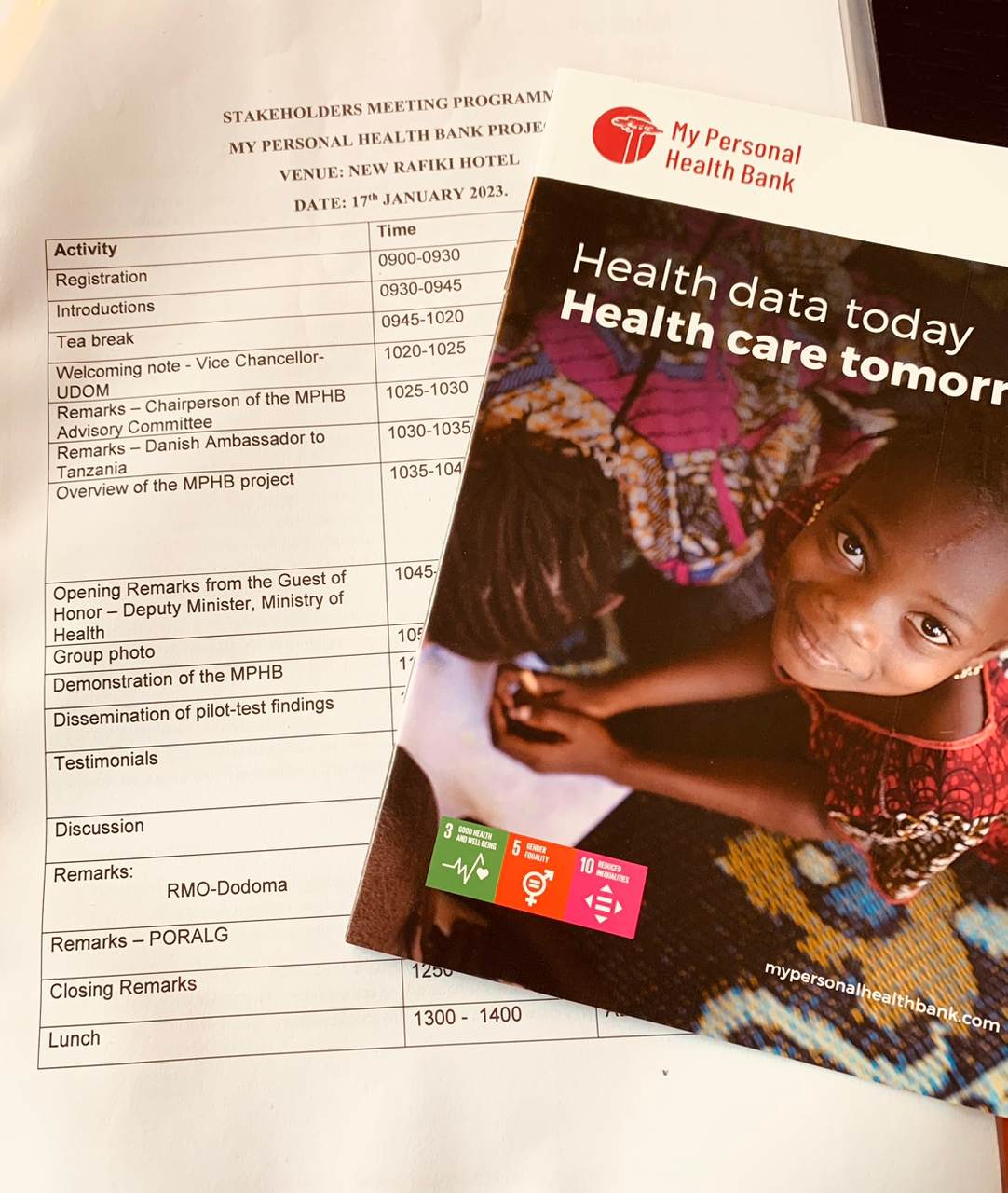
Stakeholders meeting for "My Personal Health Bank" Project
Read The Ambassador's remarks here.
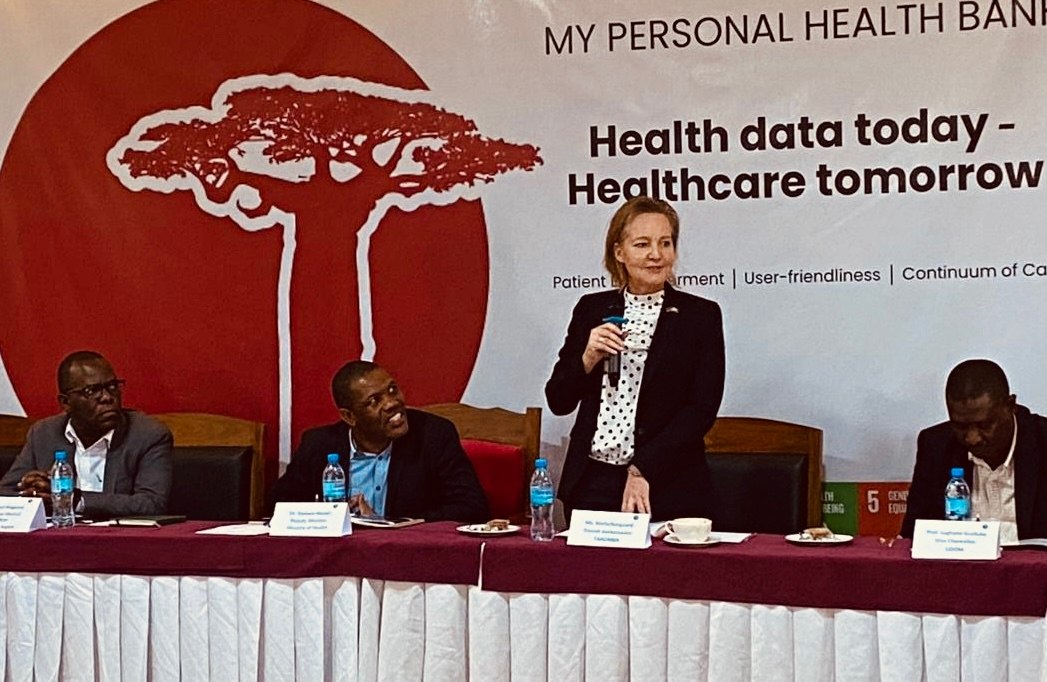
* Check against delivery *
Hon. Dr. Godwin Mollel, Deputy Minister of Health,
Prof. Lughano Kasiluka, Vice Chancellor of University of Dodoma (UDOM),
Dr. Ntuli Kapologwe, Director of Health, Social Welfare and Nutrition Services – PO-RALG and Chairperson of My Personal Health Bank (MPHB) Advisory Committee,
Ms. Anne Mette Bang, Co-Founder, My Personal Health Bank,
Prof. Razak Lokina, Deputy Vice Chancellor – Academic, Research and Consultancies - UDOM,
Distinguished Researcher, Representatives of Medical Practitioners, Representatives of Patients groups, invited guests.
Ladies and Gentlemen, Habari za Asubuhi! Good morning
It is a great pleasure to be here today. Allow me to thank the University of Dodoma, particularly the office of Vice Chancellor, for inviting me to take part in this stakeholders meeting for the My Personal Health Bank project.
Denmark and TZ has had a close partnership for more than 60 yrs – achieving significant results country-wide. In all sectors. I am proud to have been part of that journey.
DK has supported Tanzania’s health sector since 1996, so for more than a quarter of a century by now. We have been supporting the sector through the public health sector, through public-private partnerships, through support to think tanks, to civil society, and to research.
Our main partner in recent years has been the Health Basket Fund, which is still going strong after more than 20 years. It is a modality where donors come together with relevant ministries to strengthen primary health care facilities all over Tanzania – the frontline so to speak. Funds are now going directly to more than 6.600 primary health facilities.
By supporting the Health Basket Fund, we continue our efforts to strengthen the national health system, improving equity and equality in the provision of health services and building capacity amongst public health workers.
Complementary to the public health system, our support to public-private partnerships targets institutions that enhance responsive and equitable health care provision. Institutions that are fulfilling an unmet need for quality health services in Tanzania, thus complementing our support to the public health system.
That is why we have supported also private health providers such the Association of Private Health Facilities in Tanzania and the Christian Social Services Commission. The private- and faith-based providers deliver up to 40% of all health services in Tanzania and often are present in very hard-to-reach areas.
Other Danish Support is provided to think tanks, civil society and a number of researchers, including through the Danida Fellowship Centre and the Building Stronger University programme, involving collaboration between Tanzanian and Danish Universities.
We see the ‘My Personal Health Bank’ project as born through a lot of the same thinking. And we look forward to following the next steps.
Hon. Deputy Minister, Ladies and Gentlemen
The vision of the health care system in Tanzania can be boiled down to providing quality services to all Tanzanians. A strong health care system. That includes prevention, treatment, access to facilities, and a sufficient level of health staff.
An important prerequisite for establishing a coherent and cooperating health care system is to ensure that all health care professionals dealing with the same patient have easy and secure access to relevant patient information where and when it is needed. This strengthens the base for decision-making. It enhances patient safety and it helps making sure that the proper treatment is given.
Digital solutions could greatly enable this safe recording and exchange of information. The need for such solutions for patients and health providers are emphasized by the outlook for the health sector here in TZ. In the coming years, a growing population, an increasing number of senior citizens, new lifestyles bringing an increase in non-communicable diseases as well as the introduction of new treatments, will increase the pressure on health sector resources.
In Denmark, we have come a long way already. Several international studies rank Denmark among the leading countries when it comes to uptake of ICT solutions in the health sector. That does not mean that we are not still facing challenges, including getting different IT solutions to work together when you move across regional borders. A problem that the MPHB app could possibly help mitigate, if presented there.
While we are still working to improve our digital solutions at home, we are also taking our ICT know-how and solutions to other countries, including Tanzania.
An example is Danish support to Zanzibar to the development of the first ever Digital Health Strategy and digital health transformation guidelines in order to ensure proper implementation of digital health interventions for improved health services and overall health system performance.
Another example is our support to IFAKARA Health Institute to introduce the Swahili language version of the Safe Delivery App in all regions of Tanzania. The app is a handy, efficient, and innovative mobile learning and training tool to manage childbirth related situations. This can have a huge impact on reducing maternal and child mortality.
I am very happy to see that the ‘My Personal Health Bank’ project is also coming to Tanzania now. My Personal Health Bank can provide a platform to further develop the ICT-based solutions in the provision of quality health care in Tanzania. The ambition should be, in the coming years, to integrate and streamline the way patient data is accessed and shared across the health care system, in order to make relevant data accessible, when needed, and to accelerate the implementation of thoroughly tested solutions across the entire health service.
The public sector is of course essential in the introduction of ICT in the Tanzanian Health Sector. However, it cannot be complete without the private sector providers [for the reasons I have already mentioned], and the clients being at the centre of using the ICT solutions. It is therefore paramount that all stakeholders come together to make this happen. Like the event today.
In closing, allow me therefore to thank the University of Dodoma, the Government of Tanzania – particularly the Ministry of Health and PO-RALG - and the team behind ‘My Personal Health Bank’ for this stakeholder workshop.
To the Advisory Committee for ‘My Personal Health Bank’, I have this to offer as an encouragement: The days ahead may be challenging, but with vision, clarity, courage and wisdom, I am sure that you can walk the path towards the highest attainable standard of health – a fundamental right of every human being.
Thank you.